A few months ago, I opened my brokerage app on an ordinary Tuesday morning, coffee in hand, and saw a small deposit I hadn’t made myself.
It wasn’t much — the equivalent of about $130. But I hadn’t worked for it. I hadn’t clicked anything, sold anything, or logged a single hour. It simply arrived, the way rent arrives for a landlord. That $130 was a dividend payment, and it landed in my account while I was asleep.
I know $130 won’t change anyone’s life. But that morning it changed something in my head. For the first time, I could actually see the thing I’d only read about in books: money that works when you don’t.
This is the story of that $130 — where it comes from, how it adds up, and why, in my 40s, I’ve decided to spend the next chapter of my life growing it.
First, What Is a Dividend? (In Plain English)
When you buy a share of a company, you own a tiny slice of that business. Some companies take the profit they make and hand a portion of it back to their owners — the shareholders — as a cash payment. That payment is called a dividend.
Think of it like owning a small apartment building with a thousand other people. Every few months, the building collects rent, pays its bills, and splits whatever’s left among all the owners. You don’t manage the tenants or fix the plumbing. You just own your slice, and the cash shows up.
That’s a dividend. It’s one of the oldest, most boring, most reliable forms of passive income there is — and “boring but reliable” is exactly what I want at this stage of my life.
A note on the number in the title. When I first published this, the figure was about $130 a month. As of July 2026 it’s about $153. I’m leaving the title as it was, because that’s what it said on the morning I wrote it — but I’ll keep this line current. Watching the number move is the entire point of the exercise.
Where My $130 Actually Comes From
I’ll be honest about my setup, because vague blog posts that hide the details never helped me learn anything.
I don’t pick individual company stocks. I’m an engineer, not a stock analyst, and I don’t have the time (or the stomach) to research dozens of companies. Instead, I hold a handful of dividend-focused ETFs.
An ETF — an exchange-traded fund — is simply a basket that holds hundreds of companies at once. A dividend ETF specifically holds companies that are known for paying steady dividends. So instead of betting on one business, I own a small piece of hundreds of them at the same time. If one company cuts its dividend, it barely dents the total. That diversification is what lets me sleep at night.
Those ETFs pay out their collected dividends on a regular schedule, and when I add it all up, it currently averages around $130 a month.
The Actual Funds Behind the Number
Vague talk about “dividend stocks” helps nobody, so here is what is actually generating it. I hold Korea-listed ETFs, because that is what my tax-advantaged accounts allow, but the underlying exposure will look familiar to American readers.
The engine is a Dow Jones U.S. Dividend 100 tracker. Roughly a fifth of my entire portfolio sits in a Korea-listed ETF following that index — the same index behind the fund many US investors know as SCHD. I hold it across two different accounts, and it produces more of my monthly dividend than anything else I own.
Long-dated US Treasuries do the second-biggest share. About 19% of the portfolio is in a long-duration Treasury fund that distributes regularly. It has been my worst performer by some distance — down double digits — and it still pays every month. That combination taught me something I’ll come back to below.
A blended dividend-and-Treasury fund sits in my retirement account, and the S&P 500 funds — about 29% of the portfolio, and the largest single block — contribute a modest amount too. Broad index funds are not usually thought of as income products, but they do distribute.
One disclosure about how I count. Dividends also arrive in one of my accounts where the statements are awkward to read, and rather than estimate, I leave that account out of the monthly figure entirely. The real number is therefore slightly higher than the one I publish. I’d rather under-report than guess.
Why I Hold These Inside My Retirement Account
Here’s a detail I think a lot of beginners miss, and it matters.
I don’t hold these ETFs in a regular taxable account. I hold them inside my retirement pension account. In my country, this type of account lets the dividends grow tax-deferred — meaning the government doesn’t take its cut every single year, so more of my money stays invested and compounding.
It’s the difference between a snowball rolling down a clean slope versus one that loses a handful of snow at every step. Over 20 or 30 years, that difference is enormous.
If you’re just starting out, before you chase the highest-yielding fund you can find, it’s worth understanding what kind of account you’re investing through. Sometimes the account matters as much as the investment.
The Part I Usually Leave Out: I Can’t Spend a Cent of It
Here is a sentence that probably belongs in the title. I earn about $153 a month in dividends, and I cannot spend a single dollar of it.
Every account producing that income is a retirement account or a tax-advantaged wrapper that feeds into one. The money is locked until I’m in my late fifties. When my ISA matures, it doesn’t come to me — it rolls into a pension account and gets locked too.
So when you read “passive income” on this site, please read it precisely. This is not money arriving in my current account that I could spend on dinner. Every won of it is automatically buying more shares inside a box I can’t open for over a decade.
I’m spelling this out because the personal finance internet is full of dividend screenshots implying a lifestyle, and I don’t want to be part of that. The goal in this blog’s name is $100,000 a year. At roughly $1,800 a year, I am somewhere near 2% of the way there, and the 2% is locked up.
The dividends aren’t income yet. They’re an engine. The distinction matters, and confusing the two is how people end up disappointed with a perfectly good plan.
Why It Arrives Untaxed — and Why That Compounds
There’s a quiet advantage here that took me a long time to appreciate, and it’s the strongest argument for holding income-producing funds inside a retirement wrapper rather than a regular account.
Picture the same investor in an ordinary taxable brokerage account. Every dividend that arrives is taxable in the year it’s paid. Before it can buy a single additional share, a slice is gone. That happens every payment, every year, for decades — and because the missing slice never compounds, the gap it leaves grows much faster than the tax itself.
Inside my accounts, nothing is taken on arrival. The entire distribution goes straight back to work. Over a thirty-year horizon this is not a rounding difference; it is one of the largest free improvements available to an ordinary saver, and it requires no skill whatsoever — only using the right container.
Two honest qualifications. This is tax deferred, not tax free: I’ll pay when I eventually draw the money, at the rates that apply to pension income then. And the specifics are Korean. If you’re reading from elsewhere, the principle usually holds but the mechanics won’t — that’s a question for a qualified professional in your own country, not for a blog written by an engineer.
The Honest Math (This Part Surprises People)
Let’s not romanticize this. $130 a month sounds lovely, but how much money does it actually take to produce it?
Dividend ETFs typically pay somewhere in the range of 3% to 4% per year on the amount you’ve invested. So to generate about $1,600 a year (which is what $130 a month works out to), you need roughly $40,000 to $50,000 invested and working for you.
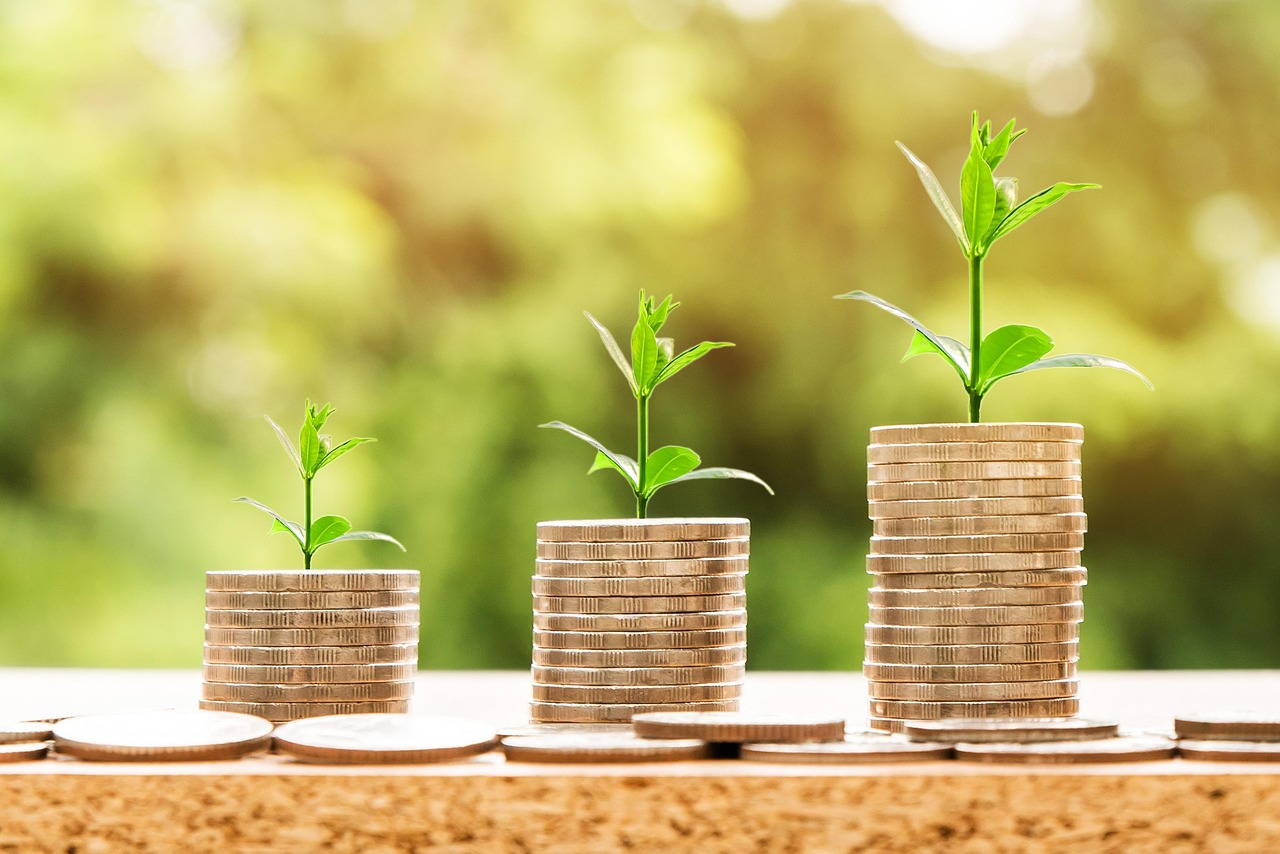
That’s a real number. It took me years of steady contributions to build that base, and I’m not going to pretend I did it overnight. But here’s the encouraging flip side: every additional dollar I invest buys me a few more cents of income, forever. The machine doesn’t turn off. It just gets bigger.
And this is where it gets genuinely exciting for me. If $45,000 produces $130 a month, then the path to my real goal becomes a math problem instead of a mystery. Bigger contributions, reinvested dividends, and time are the three levers. I can pull all three.
What I’m Doing to Grow It From Here
Three simple things, repeated boringly:
First, I keep contributing every month, automatically, so I never have to rely on willpower.
Second, for now I reinvest every dividend instead of spending it. That $130 buys more shares, which pay more dividends, which buy more shares. It’s slow at first and then, from what everyone who’s done it tells me, alarmingly fast later.
Third, I keep my costs low and my choices simple. Boring, broad, low-fee funds. I’m not trying to be clever. I’m trying to be consistent for a very long time.
The Dividend Traps I Try to Avoid
Dividend investing attracts a particular kind of mistake, and I’ve made versions of most of them.
Chasing the highest yield. Yield is a fraction, and the fastest way to make it large is for the price — the denominator — to collapse. A fund advertising a yield far above its peers is often telling you something has gone wrong, or that the payout isn’t sustainable. Unusually high yield is a question, not an answer.
Thinking a dividend is free money. It isn’t. When a dividend is paid, the share price adjusts downward by roughly the amount paid. You haven’t been handed anything extra; part of your investment has been moved from one pocket to another, and in a taxable account, taxed on the way. Dividends are excellent for building a habit and useless as a source of magic.
Buying complicated income products for the headline number. There are funds engineered to produce very high monthly payouts through option strategies. Some are legitimate tools. Many quietly hand your own capital back to you while the share price grinds downward, so the yield looks marvellous and the total value doesn’t move. If I can’t explain in one sentence where the money comes from, I don’t buy it.
Ignoring total return. This is the one that catches me. My long-dated Treasury fund pays reliably every single month and is down double digits, and the monthly payment is emotionally satisfying enough that it took me a while to look at the whole picture honestly. The dividend feels like progress. The total return is the truth. I try to check both.
Questions I Get Asked
Do you reinvest the dividends?
Automatically, all of them. I don’t have a choice, and I’m glad — the version of me that could withdraw them would eventually find a reason to.
Why not just buy high-yield funds and get there faster?
Because yield is only half of the number that matters. A 10% yield on something losing 12% a year is a slow way of going backwards. I’d rather own a lower yield attached to companies that keep growing what they pay.
When can you actually spend it?
Not for well over a decade. That’s the deal I signed in exchange for the tax treatment, and I made it deliberately. The illiquidity is a feature that protects the plan from me.
Does paying a dividend make a company safer?
Not by itself — though the screening rules behind good dividend indexes do tend to favour companies with consistent profits and manageable debt. That’s the real benefit: not the payment, but what a company has to look like in order to qualify.
How long until it’s $1,000 a month?
I genuinely don’t know, and any specific answer would rest on assumptions I couldn’t defend. What I can tell you is that it moved from about $130 to about $153 in a matter of months, and the reason wasn’t a change in any dividend rate. It was that I kept buying. That is the only lever I actually control.
What I’d Tell Someone Standing Where I Was
If you’re in your 40s and you feel behind, I want you to hear this from someone who feels the same way: starting late is still starting.
You will not build a fortune this month. Neither will I. But the person who invests a modest amount, consistently, inside the right account, for the next ten or twenty years, ends up somewhere completely different from the person who keeps waiting for the perfect moment.
My $130 a month is not the finish line. It’s the proof of concept. It’s the first light on a long road — and I’d rather be walking it slowly than standing still wishing I’d started.
I’ll keep sharing the real numbers here as they grow. If you’re walking a similar road, I’d love the company.
A quick, honest note: I’m not a financial advisor, and nothing here is personalized investment advice. I’m just an ordinary person documenting what I’m actually doing. Please do your own research, and consider speaking with a qualified professional before making investment decisions.
— Steve